When I interviewed John Cage in 1987, he told me something I’ll never forget—that attending Edgar Varèse’s concerts conducted by Nicolas Slonimsky in Philharmonic Hall in downtown Los Angeles in the late 1920’s were “statements of belief” for him. The experience set Cage on course for a lifetime as a composer of new and challenging music.
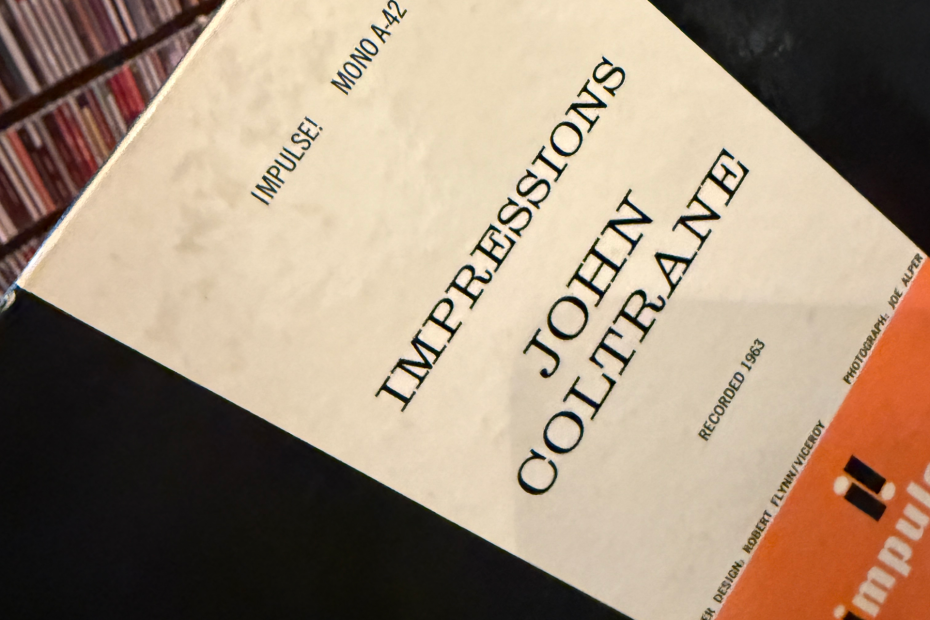
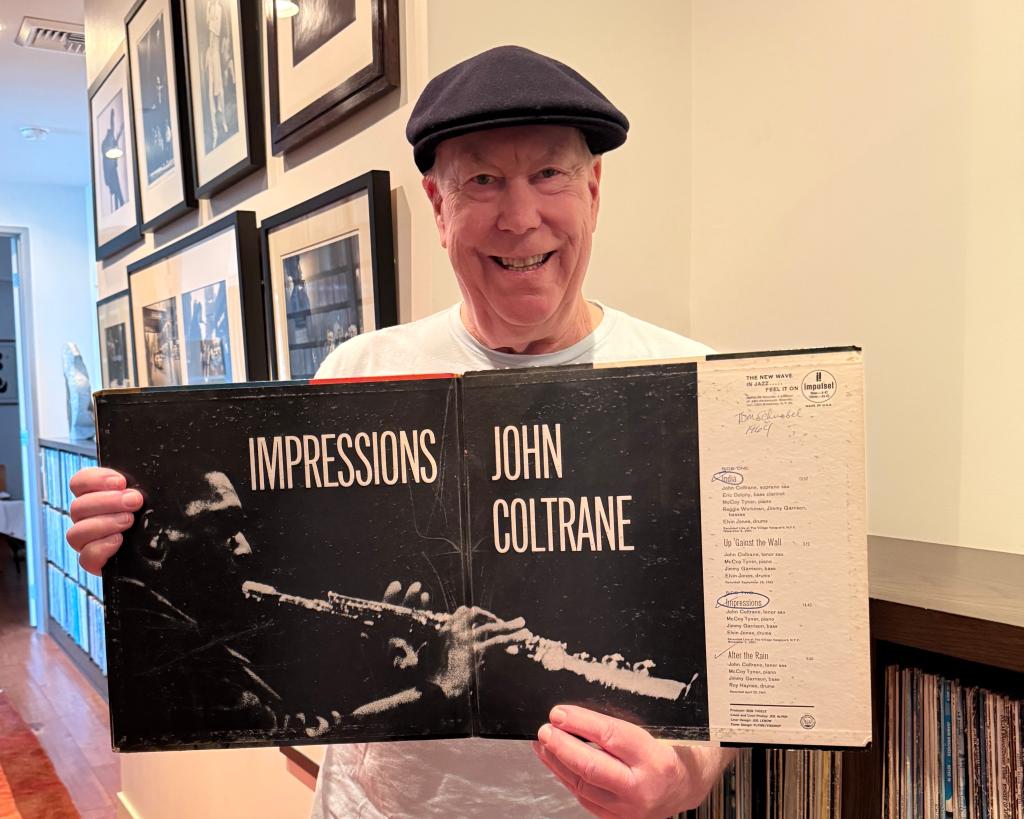
My own “statement of belief” took place in my upstairs bedroom in the Schnabel home as a16 year-old total straight-arrow, a competitive swimmer and good surfer who didn’t drink or smoke. I had purchased a copy of John Coltrane’s Impressions album at Wallichs Music City, where you could sample vinyl at their listening stations. I brought the record home and started listening. Side One included a 14-minute modal song called “India,” so named because Coltrane had been studying with Ravi Shankar. I sat mesmerized on the bedroom floor, hearing and feeling things I’ve never experienced before. The music sent me into a trance, something no music had ever elicited in me.
This was my first musical epiphany, and I realized then and there the power of music to move mind and spirit. The experience has stayed with me all my life and shaped my destiny. It was my own “statement of belief.”